
This information is based on Japanese-market vehicles (JDM specification). Parts and symptoms may differ in your market.
Prius: common problems
Pick a symptom to see what to suspect first, how to tell, and typical repair cost.
Pick a model code / engine to switch the weak points, cases and common failures below.
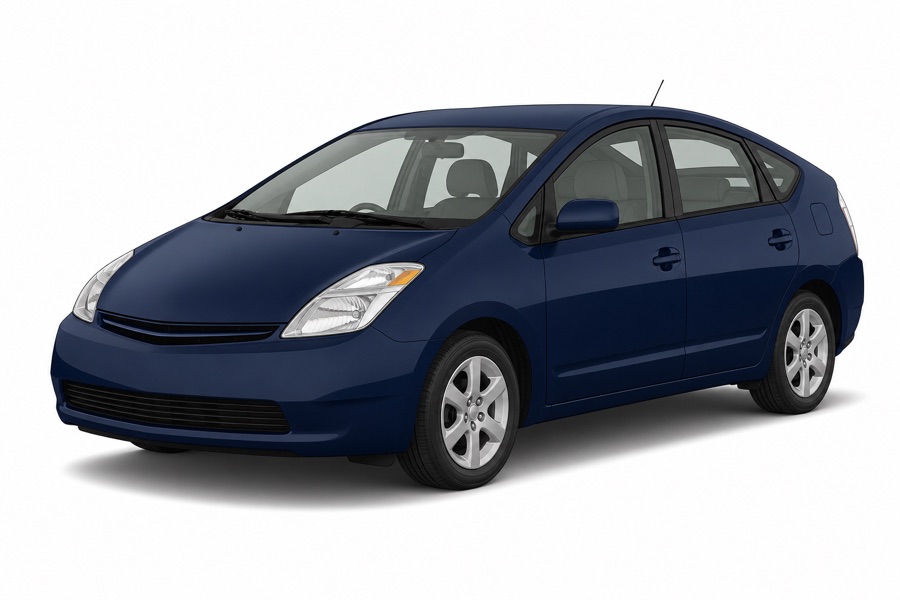 Illustration for reference
By symptom
No reviewed cases for this model yet.
Most common failures on this model (by part)
Share of the 270 repair cases we collected in which each part was the cause or was replaced. This is not a failure rate per vehicle on the road.
- エンジンアンダーカバー23 cases 9%Main symptom: アンダーカバーが外れて引きずるtypically around 40,000 km
- ハイブリッド用ウォーターポンプ(インバーター冷却)17 cases 6%Main symptom: Stalling / stops while drivingtypically around 150,000 km
- Power steering pump15 cases 6%Main symptom: ハンドルが激しく振動する・勝手に動くtypically around 90,000 km
- Brake actuator (hybrid)14 cases 5%Main symptom: Weak brakes / long pedaltypically around 200,000 km
- Hybrid battery14 cases 5%Main symptom: Hybrid system warningtypically around 140,000 km・median ¥115,500
- EGR valve13 cases 5%Main symptom: Rough idle / vibrationtypically around 100,000 km
- ステアリングインターミディエイトシャフト11 cases 4%Main symptom: ハンドルからカタカタ・ガタつきtypically around 50,000 km
- 燃料タンク・サクションチューブ9 cases 3%Main symptom: Fuel leak / fuel smelltypically around 60,000 km
- Inverter (hybrid)9 cases 3%Main symptom: Hybrid system warningtypically around 70,000 km
- 12V auxiliary battery8 cases 3%Main symptom: Flat or weak batterytypically around 10,000 km
Hybrid system life expectancy (from case mileage)
Mileage at the time the HV battery, inverter and similar parts were the cause or were replaced. This is not an average lifespan but the median and range (10th to 90th percentile) of the mileage at replacement.
| Part | Japanese cases | Overseas cases |
|---|---|---|
| Hybrid battery | Median 141,000 km (48,000 to 208,000 km, 9 cases) | Median 246,000 km (174,000 to 315,000 km, 6 cases) |
| Inverter (hybrid) | Median 67,000 km (44,000 to 126,000 km, 9 cases) | Median 64,000 km (21,000 to 149,000 km, 4 cases) |
| Brake actuator (hybrid) | Median 200,000 km (22,000 to 250,000 km, 13 cases) | Median 168,000 km (107,000 to 250,000 km, 40 cases) |
| Brake booster | Median 187,000 km (161,000 to 255,000 km, 6 cases) | Median 185,000 km (69,000 to 257,000 km, 9 cases) |
| ハイブリッド用ウォーターポンプ(インバーター冷却) | Median 153,000 km (55,000 to 271,000 km, 12 cases) | Median 121,000 km (58,000 to 230,000 km, 3 cases) |
| DC-DC converter | Too few cases with mileage | Median 177,000 km (96,000 to 244,000 km, 5 cases) |
| ハイブリッドトランスアクスル | Too few cases with mileage | Median 138,000 km (118,000 to 155,000 km, 3 cases) |
| 12V auxiliary battery | Median 6,000 km (3,000 to 10,000 km, 4 cases) | Median 127,000 km (82,000 to 201,000 km, 3 cases) |
Cases without mileage are excluded. Results vary widely with usage (repeated short trips vs. long highway runs) and climate.
What fails inspection at this mileage (UK data)
Failure rates by mileage from the UK MOT open data.
20系 1NZ-FXE
| 0〜5万km415 tested | Stabiliser link 4.1%Brake caliper 3.4%CV boot 2.9% |
|---|---|
| 5〜10万km1,301 tested | Stabiliser link 1.9%Brake caliper 1.5%フロントガラス 1.3% |
| 10〜15万km3,696 tested | Stabiliser link 2.9%CV boot 1.6%フロントガラス 1.3% |
| 15〜20万km5,717 tested | Stabiliser link 5.9%CV boot 3.7%フロントガラス 1.9% |
| 20〜25万km5,955 tested | Stabiliser link 8.4%CV boot 7.0%フロントガラス 2.1% |
| 25〜30万km4,392 tested | Stabiliser link 11.3%CV boot 10.7%Exhaust / muffler 2.6% |
| 30以上万km7,594 tested | CV boot 13.8%Stabiliser link 11.2%コイルスプリング 3.6% |
30系・50系 2ZR-FXE
| 0〜5万km13,574 tested | Stabiliser link 0.8%フロントガラス 0.6%Brake disc (rotor) 0.3% |
|---|---|
| 5〜10万km25,496 tested | Stabiliser link 1.5%フロントガラス 0.8%Ball joint 0.5% |
| 10〜15万km23,378 tested | Stabiliser link 3.2%フロントガラス 1.0%Ball joint 0.7% |
| 15〜20万km19,710 tested | Stabiliser link 4.1%フロントガラス 0.9%parking_brake 0.9% |
| 20〜25万km16,763 tested | Stabiliser link 4.9%フロントガラス 1.0%parking_brake 0.8% |
| 25〜30万km13,985 tested | Stabiliser link 5.7%フロントガラス 1.2%Shock absorber 1.1% |
| 30以上万km29,846 tested | Stabiliser link 6.8%Shock absorber 1.8%フロントガラス 1.4% |
Corrosion and consumables excluded. Source: DVSA (Open Government Licence v3.0)
Differences from overseas specifications
Export versions are also built in Japan (堤(愛知)), so major parts such as the engine and hybrid system are shared with the Japanese-market car. Of 11,161 VINs attached to US complaints, 97% start with "J", indicating Japanese production.
- US-market Prius are also built in Japan (Tsutsumi plant); major parts such as the HV battery, inverter, brake actuator and EGR are the same as the Japanese-market car.
- What differs is fuel (E10 gasoline in the US), emissions regulations, how quickly mileage accumulates (long commutes and rideshare use) and climate.
- In Japan many cars are exported used before high mileage, so high-mileage problems (for example the 3rd-generation head gasket) show up first in overseas complaints. The same view applies to high-mileage cars in Japan.
- The US has a public complaint channel (NHTSA) and large owner forums, so counts are high. A high count does not mean the car is fragile.
Common failures overseas (by part)
Share of 1566 overseas cases in which each part was the cause or was replaced. Counted separately from the Japanese data.
- Headlight bulb510 cases 33%Main symptom: Lights not workingtypically around 70,000 km
- Brake actuator (hybrid)292 cases 19%Main symptom: ABS / stability warning light ontypically around 170,000 km
- Brake booster134 cases 9%Main symptom: ABS / stability warning light ontypically around 190,000 km
- Brake master cylinder77 cases 5%Main symptom: ABS / stability warning light ontypically around 200,000 km
- HIDバラスト74 cases 5%Main symptom: Lights not workingtypically around 90,000 km
- Inverter (hybrid)73 cases 5%Main symptom: 走行中に電源が落ちる・システム停止typically around 60,000 km
- エンジン制御コンピューター64 cases 4%Main symptom: Lights not workingtypically around 100,000 km
- メーターパネル・基板48 cases 3%Main symptom: Navigation / meter rebootstypically around 170,000 km
3rd gen (30 series) 1.8L hybrid
- Model codes
ZVW30- Years
- 2009〜2015
By symptom
- アンダーカバーが外れて引きずる23 cases · not reviewed yet
- Weak brakes / long pedal20 cases · not reviewed yet
- Broken or detached parts18 cases · not reviewed yet
- All warning lights come on12 cases · not reviewed yet
- Hybrid system warning12 cases · not reviewed yet
- Noise from underneath11 cases · not reviewed yet
- Rough idle / vibration9 cases · not reviewed yet
- Fuel leak / fuel smell9 cases · not reviewed yet
Common failures (by part)
- エンジンアンダーカバー23 cases 15%Main symptom: アンダーカバーが外れて引きずるtypically around 40,000 km
- EGR valve13 cases 8%Main symptom: Rough idle / vibrationtypically around 100,000 km
- ステアリングインターミディエイトシャフト10 cases 6%Main symptom: ハンドルからカタカタ・ガタつきtypically around 50,000 km
- Brake actuator (hybrid)8 cases 5%Main symptom: Weak brakes / long pedaltypically around 200,000 km
- Brake booster8 cases 5%Main symptom: Weak brakes / long pedaltypically around 190,000 km
- 燃料タンク・サクションチューブ8 cases 5%Main symptom: Fuel leak / fuel smelltypically around 60,000 km
- Hybrid battery8 cases 5%Main symptom: Hybrid system warningtypically around 170,000 km
- Intake manifold6 cases 4%Main symptom: Rough idle / vibrationtypically around 80,000 km
Common failures overseas (by part)
Share of 468 overseas cases in which each part was the cause or was replaced. Counted separately from the Japanese data.
- Brake actuator (hybrid)151 cases 32%Main symptom: ABS / stability warning light ontypically around 170,000 km
- Brake booster129 cases 28%Main symptom: ABS / stability warning light ontypically around 190,000 km
- Brake master cylinder74 cases 16%Main symptom: ABS / stability warning light ontypically around 220,000 km
- Inverter (hybrid)58 cases 12%Main symptom: Hybrid system warningtypically around 60,000 km
- Headlight bulb19 cases 4%Main symptom: Lights not working
- Hybrid battery18 cases 4%Main symptom: Hybrid system warningtypically around 230,000 km
2nd gen (20 series) 1.5L hybrid
- Model codes
NHW20- Years
- 2003〜2011
By symptom
- Hybrid system warning9 cases · not reviewed yet
- Stalling / stops while driving8 cases · not reviewed yet
- Weak brakes / long pedal7 cases · not reviewed yet
- 走行中に電源が落ちる・システム停止6 cases · not reviewed yet
- Cannot drive / immobile5 cases · not reviewed yet
- All warning lights come on5 cases · not reviewed yet
- No acceleration / lack of power4 cases · not reviewed yet
- Engine won't start (starter doesn't turn)4 cases · not reviewed yet
Common failures (by part)
- ハイブリッド用ウォーターポンプ(インバーター冷却)15 cases 27%Main symptom: Stalling / stops while drivingtypically around 160,000 km
- Brake actuator (hybrid)6 cases 11%Main symptom: Weak brakes / long pedaltypically around 100,000 km
- Fuse / relay4 cases 7%Main symptom: 走行中に電源が落ちる・システム停止typically around 190,000 km
- Hybrid battery4 cases 7%Main symptom: Hybrid system warning
- ABS unit3 cases 5%Main symptom: Weak brakes / long pedaltypically around 180,000 km
- Water pump3 cases 5%Main symptom: Air-con not coldtypically around 130,000 km
- ABS・ブレーキ制御コンピューター2 cases 4%Main symptom: Weak brakes / long pedal
- ルーフ・溶接部2 cases 4%Main symptom: Water leak into cabin
Common failures overseas (by part)
Share of 1001 overseas cases in which each part was the cause or was replaced. Counted separately from the Japanese data.
- Headlight bulb491 cases 49%Main symptom: Lights not workingtypically around 70,000 km
- Brake actuator (hybrid)135 cases 13%Main symptom: Weak brakes / long pedaltypically around 190,000 km
- HIDバラスト74 cases 7%Main symptom: Lights not workingtypically around 90,000 km
- エンジン制御コンピューター50 cases 5%Main symptom: Lights not workingtypically around 60,000 km
- メーターパネル・基板46 cases 5%Main symptom: Navigation / meter rebootstypically around 170,000 km
- Wiring / connector33 cases 3%Main symptom: Rust / corrosion
4th gen (50 series) 1.8L hybrid
- Model codes
ZVW50ZVW51ZVW55- Years
- 2015〜2022
By symptom
- ランプ内側の曇り7 cases · not reviewed yet
- Check engine light on4 cases · not reviewed yet
- Cannot drive / immobile2 cases · not reviewed yet
- Brake squeal2 cases · not reviewed yet
- Clicking when turning2 cases · not reviewed yet
- Broken or detached parts2 cases · not reviewed yet
Common failures (by part)
- テールランプ6 cases 26%Main symptom: ランプ内側の曇りtypically around 30,000 km
- Drive shaft3 cases 13%Main symptom: Clicking when turning
- Body panel2 cases 9%Main symptom: Rust / corrosion
- クリアランスソナー2 cases 9%Main symptom: ランプ内側の曇り
- A/C compressor1 cases 4%Main symptom: Noise when the air-con is on
- Refrigerant (A/C gas)1 cases 4%Main symptom: Noise when the air-con is on
- Brake pads1 cases 4%Main symptom: Brake squeal
- ECU1 cases 4%Main symptom: Sudden drop in fuel economy
Common failures overseas (by part)
Share of 18 overseas cases in which each part was the cause or was replaced. Counted separately from the Japanese data.
- Catalytic converter4 cases 22%Main symptom: Coolant leak / coolant loss
- DC-DC converter4 cases 22%Main symptom: Coolant leak / coolant loss
- 排気熱回収器4 cases 22%Main symptom: 暖房が効かない(排気熱回収)
- 12V auxiliary battery2 cases 11%Main symptom: Check engine light on
- Brake actuator (hybrid)2 cases 11%Main symptom: Weak brakes / long pedal
- Brake booster2 cases 11%Main symptom: Cannot drive / immobile
1st gen (10/11 series) 1.5L hybrid
- Model codes
NHW10NHW11- Years
- 1997〜2003
By symptom
- ハンドルが激しく振動する・勝手に動く9 cases · not reviewed yet
- All warning lights come on4 cases · not reviewed yet
- No acceleration / lack of power3 cases · not reviewed yet
- Stalling / stops while driving3 cases · not reviewed yet
- Heavy steering2 cases · not reviewed yet
- Hybrid system warning2 cases · not reviewed yet
Common failures (by part)
- Power steering pump11 cases 52%Main symptom: ハンドルが激しく振動する・勝手に動くtypically around 90,000 km
- エンジン制御コンピューター4 cases 19%Main symptom: All warning lights come ontypically around 110,000 km
- Hybrid battery2 cases 10%Main symptom: No acceleration / lack of power
- コンロッド(エンジン内部破損)1 cases 5%Main symptom: Oil leak / seepage
- ハイブリッドコンピューター(HV ECU)1 cases 5%Main symptom: No acceleration / lack of power
- ハイブリッド用ウォーターポンプ(インバーター冷却)1 cases 5%Main symptom: Hybrid system warning
- イグニッションスイッチ1 cases 5%Main symptom: Stalling / stops while driving
- Inverter (hybrid)1 cases 5%Main symptom: Hybrid system warning
Common failures overseas (by part)
Share of 78 overseas cases in which each part was the cause or was replaced. Counted separately from the Japanese data.
- Power steering pump22 cases 28%Main symptom: Heavy steering
- ステアリングインターミディエイトシャフト20 cases 26%Main symptom: ハンドルが激しく振動する・勝手に動くtypically around 40,000 km
- 燃料タンク・サクションチューブ9 cases 12%Main symptom: 走行中に電源が落ちる・システム停止
- エンジン制御コンピューター5 cases 6%Main symptom: 走行中に電源が落ちる・システム停止
- Hybrid battery5 cases 6%Main symptom: 走行中に電源が落ちる・システム停止
- Brake actuator (hybrid)4 cases 5%Main symptom: Weak brakes / long pedal
5th gen (60 series) 2.0L hybrid
- Model codes
MXWH60MXWH61MXWH65- Years
- 2023〜
By symptom
- Flat or weak battery6 cases · not reviewed yet
- Engine won't start (starter doesn't turn)2 cases · not reviewed yet
Common failures (by part)
- 12V auxiliary battery6 cases 67%Main symptom: Flat or weak batterytypically around 10,000 km
- ブレーキペダルストロークセンサー・圧力センサー1 cases 11%Main symptom: Weak brakes / long pedal
- ミリ波レーダー1 cases 11%Main symptom: 運転支援の誤作動・誤警報
- Weather strip / seal1 cases 11%Main symptom: Noise from underneath
5th gen (60 series) 1.8L hybrid
- Model codes
ZVW60- Years
- 2023〜
By symptom
No reviewed cases for this engine yet. See the All engines tab.
Common failures (by part)
- ハイブリッドトランスアクスル1 cases 100%Main symptom: Stalling / stops while driving