
This information is based on Japanese-market vehicles (JDM specification). Parts and symptoms may differ in your market.
Sienta: common problems
Pick a symptom to see what to suspect first, how to tell, and typical repair cost.
Pick a model code / engine to switch the weak points, cases and common failures below.
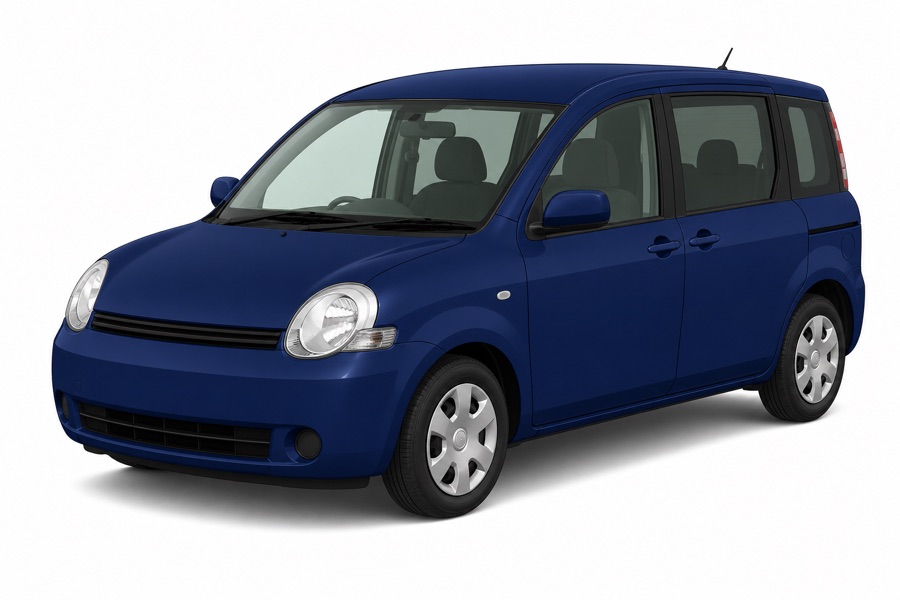 Illustration for reference
By symptom
No reviewed cases for this model yet.
Most common failures on this model (by part)
Share of the 69 repair cases we collected in which each part was the cause or was replaced. This is not a failure rate per vehicle on the road.
- Piston rings16 cases 23%Main symptom: Oil consumptiontypically around 70,000 km
- CVT6 cases 9%Main symptom: Harsh shiftingtypically around 60,000 km
- VVT actuator / OCV5 cases 7%Main symptom: No acceleration / lack of powertypically around 60,000 km
- Brake booster3 cases 4%Main symptom: Weak brakes / long pedaltypically around 80,000 km
- ECU3 cases 4%Main symptom: No acceleration / lack of powertypically around 40,000 km
- Weather strip / seal3 cases 4%Main symptom: Water leak into cabin
- Automatic transmission (ATF)2 cases 3%Main symptom: Speed-related humming / droning
- コンロッド(エンジン内部破損)2 cases 3%Main symptom: Oil consumption
- Door latch / handle2 cases 3%Main symptom: 走行中にドアが開く・ロック不良
- EGR valve2 cases 3%Main symptom: Oil consumption
Hybrid system life expectancy (from case mileage)
Mileage at the time the HV battery, inverter and similar parts were the cause or were replaced. This is not an average lifespan but the median and range (10th to 90th percentile) of the mileage at replacement.
| Part | Japanese cases | Overseas cases |
|---|---|---|
| Brake booster | Median 79,000 km (51,000 to 197,000 km, 3 cases) | Too few cases with mileage |
Cases without mileage are excluded. Results vary widely with usage (repeated short trips vs. long highway runs) and climate.
1NZ 1.5L ガソリン
- Model codes
NCP81NCP175NCP85NC81- Years
- 1993〜2015
By symptom
- Oil consumption16 cases · not reviewed yet
- Knocking / pinging9 cases · not reviewed yet
- Engine noise when cold7 cases · not reviewed yet
- Rattling / clattering from the engine6 cases · not reviewed yet
- Cannot drive / immobile4 cases · not reviewed yet
- Rough idle / vibration3 cases · not reviewed yet
- Harsh shifting3 cases · not reviewed yet
- Check engine light on3 cases · not reviewed yet
Common failures (by part)
- Piston rings16 cases 31%Main symptom: Oil consumptiontypically around 70,000 km
- CVT6 cases 12%Main symptom: Harsh shiftingtypically around 60,000 km
- VVT actuator / OCV4 cases 8%Main symptom: Engine noise when coldtypically around 60,000 km
- Automatic transmission (ATF)2 cases 4%Main symptom: Speed-related humming / droning
- コンロッド(エンジン内部破損)2 cases 4%Main symptom: Oil consumption
- Door latch / handle2 cases 4%Main symptom: 走行中にドアが開く・ロック不良
- ECU2 cases 4%Main symptom: Rough idle / vibration
- EGR valve2 cases 4%Main symptom: Oil consumption
2NR 1.5L ガソリン
- Model codes
NSP170- Years
- 2015〜2022
By symptom
- No acceleration / lack of power2 cases · not reviewed yet
- Water leak into cabin2 cases · not reviewed yet
Common failures (by part)
- Weather strip / seal2 cases 25%Main symptom: Water leak into cabin
- スパイラルケーブル1 cases 13%Main symptom: Flat or weak battery
- ECU1 cases 13%Main symptom: No acceleration / lack of power
- 燃料タンク・サクションチューブ1 cases 13%Main symptom: Fuel leak / fuel smell
- Intake manifold1 cases 13%Main symptom: No acceleration / lack of power
- Starter motor1 cases 13%Main symptom: Engine won't start (starter doesn't turn)
- VVT actuator / OCV1 cases 13%Main symptom: Air-con not cold
- Water pump1 cases 13%Main symptom: Rattling / clattering from the engine
2nd gen (20 series) 1.5L hybrid
- Model codes
NHP170- Years
- 2015〜2021
By symptom
- Weak brakes / long pedal2 cases · not reviewed yet
- Brake warning light on2 cases · not reviewed yet
Common failures (by part)
- Brake booster2 cases 33%Main symptom: Weak brakes / long pedal
- Inverter (hybrid)1 cases 17%Main symptom: Hybrid system warning
- Sliding door roller / rail1 cases 17%Main symptom: Sliding door won't open or close
- Weather strip / seal1 cases 17%Main symptom: Flat or weak battery
- フロントガラス1 cases 17%Main symptom: ランプ内側の曇り
M15A 1.5L ハイブリッド
- Model codes
MXPL10MXPL15- Years
- 2022〜2026
By symptom
No reviewed cases for this engine yet. See the All engines tab.
Common failures (by part)
- Refrigerant (A/C gas)1 cases 25%Main symptom: Air-con not cold
- Battery1 cases 25%Main symptom: Broken or detached parts
- Body panel1 cases 25%Main symptom: Clunking / knocking over bumps
- Hybrid battery1 cases 25%Main symptom: Engine won't start (starter doesn't turn)